It seems like protein is literally everywhere these days! From protein chips and bars to cereals and shakes, it is hard to walk through a grocery store without seeing products advertising added protein.
It probably makes you wonder: Is my child getting enough protein? Do they need these added-protein products?
In this post, I am breaking down some of the most common protein questions I hear from parents. You’ll learn how much protein kids actually need, why they need it, whether your child is likely getting enough, and what too much protein can look like.
How Much Protein Do Kids Actually Need?
Kids may actually need less protein than many parents think! Take a look at the chart below. The Recommended Dietary Allowance (RDA) for a 4–8-year-old is 19 grams of protein per day.
To put that into perspective, protein can add up quickly from foods kids may already be eating. One cup of milk has about 8 grams of protein, 1 tablespoon of peanut butter has about 4 grams, one slice of bread has about 3 grams, and one string cheese has about 7 grams. Together, these foods provide about 22 grams of protein. That’s before counting other foods they may eat throughout the day.
Keep in mind that this is only an example. Protein needs can vary based on different factors such as your child’s age, size and activity level.
| Age | Protein RDA |
| 1–3 years | 13 g/day |
| 4–8 years | 19 g/day |
| 9–13 years | 34 g/day |
| Girls 14–18 | 46 g/day |
| Boys 14–18 | 52 g/day |
Table adapted from National Academies of Sciences, Engineering, and Medicine, Dietary Reference Intakes (DRIs).
Why Do Kids Need Protein?
Put simply, protein is important for growth and development. Kids need protein to build and repair muscles and other tissues, and to make enzymes and hormones that help the body to function. Many protein-containing foods also provide other important nutrients kids need for growth, such as iron, zinc, calcium and vitamin B12.
Is My Child Getting Enough Protein?
Most kids are able to get enough protein through their diet. In my practice, I see kids low in other nutrients more often than I see kids low in protein. However, picky eating and meal skipping can make it more difficult for some children to meet their protein needs. Additionally, children with higher protein needs, such as active athletes, may have more trouble meeting their needs if they don’t pay attention to including protein throughout the day.
What Foods Have Protein?
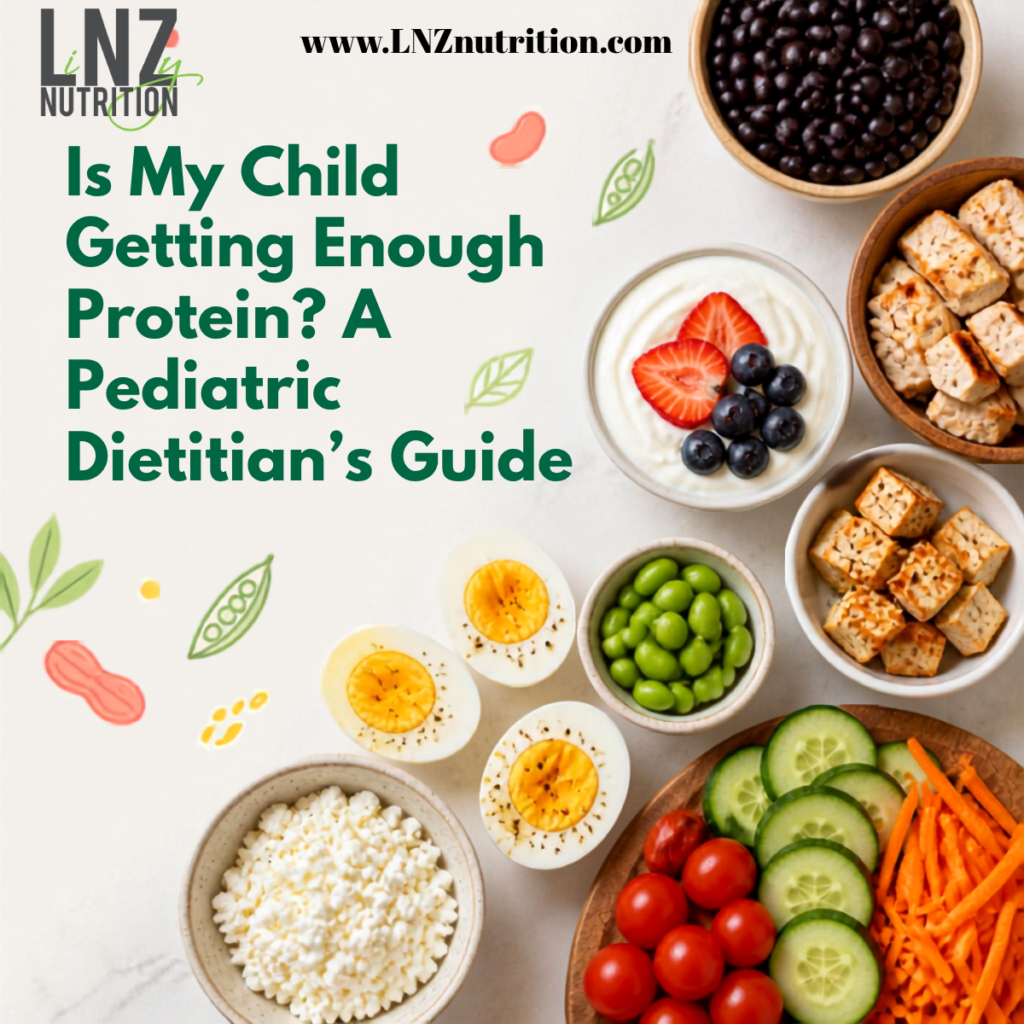
Protein is naturally found in meats, poultry, fish, eggs, dairy, nuts, seeds, nut butters, seed butters, beans, lentils and some grains. Additionally, many products are fortified with protein.
Examples include:
A peanut butter and jelly sandwich could contribute ~10-15 grams of protein depending on the bread brand and amount of peanut butter.
Two eggs with cheese will contribute ~12-16 grams of protein
My Child Is a Picky Eater — What If They Don’t Eat Many Protein Foods?
This is something I hear from parents ALL of the time! Parents worry that their child chooses carbs and either does not want protein-containing foods or does not like many protein foods. The best thing you can do in these situations is continue to offer protein foods alongside the carbohydrate foods. This does not mean that you should offer them a full portion of a food that is not preferred. Chances are, in this situation they are not going to try it! Instead, offer a small portion/taste of the protein food alongside the preferred foods. Do not pressure them to taste it. If the protein foods are never offered, chances are they are not going to request them. Also remember, protein is found in other foods and not just in meats. For example, 1 cup of cooked pasta with 1 cheese stick will contribute about 14 grams of protein!
Does My Child Need Protein at Every Meal and Snack?
While it’s a good goal for most meals and snacks to incorporate some sort of protein, it is not realistic for every meal and snack to be perfect! Instead, use it as a rule of thumb and try to incorporate a protein + a carbohydrate + color (fruits and/or vegetables) at most meals and snacks. This also does not mean that snacks need to include 20 grams of protein. Hummus and pretzels for example, would contribute ~5 grams of protein, and popcorn with an apple would contribute almost no protein. Both are still great snacks!
Does My Child Need Protein Bars, Shakes and Other High-Protein Foods?
The short and annoying answer is: it depends.
If your child is not meeting their nutrition needs through food alone, then yes, they may need a protein bar or shake. However, if your child is eating 3 meals/day and snacks and includes protein in their diet, then no, they likely don’t need protein bars and protein shakes.
While there are situations where they may come in handy, most elementary-aged kids and even teenagers don’t need to add protein powders and protein-heavy bars to their day. Kids don’t necessarily need bars and shakes made with 20 grams of protein. Bars with less than 10 grams of protein can be plenty for a snack, and shakes made with Greek yogurt, milk or nut butters are other good protein-containing options.
Additionally, protein chips, protein pretzels, and other products that boast added protein are never going to be a necessary part of a child’s diet.
Can Kids Eat Too Much Protein?
Yes, eating too much protein is possible. Most kids will not overconsume protein from eating whole foods. However, when adding multiple protein drinks, bars and other protein-fortified products it is possible for your child to consume more protein than their body needs.
More protein does not equal better.
While there is not enough research on the long-term effects of very high-protein diets in otherwise healthy children, I would not recommend it. Eating a very high protein diet could also lead to kids feeling full and having less interest in other foods. As a result they might miss out on other important nutrients.
What About Kids Who Play Sports?
Youth athletes may have higher needs than other kids and their needs will depend on their age, gender, weight and activity level. In addition to how much protein they eat, the timing of when they eat it will also matter. However, according to HealthyChildren.org the official parenting platform by the American Academy of Pediatrics (AAP) “Most young athletes who eat a healthy, well-balanced diet do not need and would not benefit from protein supplements.” More to come on the diet of youth athletes in another post soon!
The Bottom Line on Protein for Kids
Protein is important, but it should not be the only focus! My rule of thumb is to try and incorporate a combination of protein + carbohydrates + color (fruits and vegetables) at most meals and snacks! Remember that every meal and snack won’t be perfect, and that is ok! As a pediatric dietitian, I am here to support you! I have a few new programs that can all help you understand your child and their exact nutrition needs!