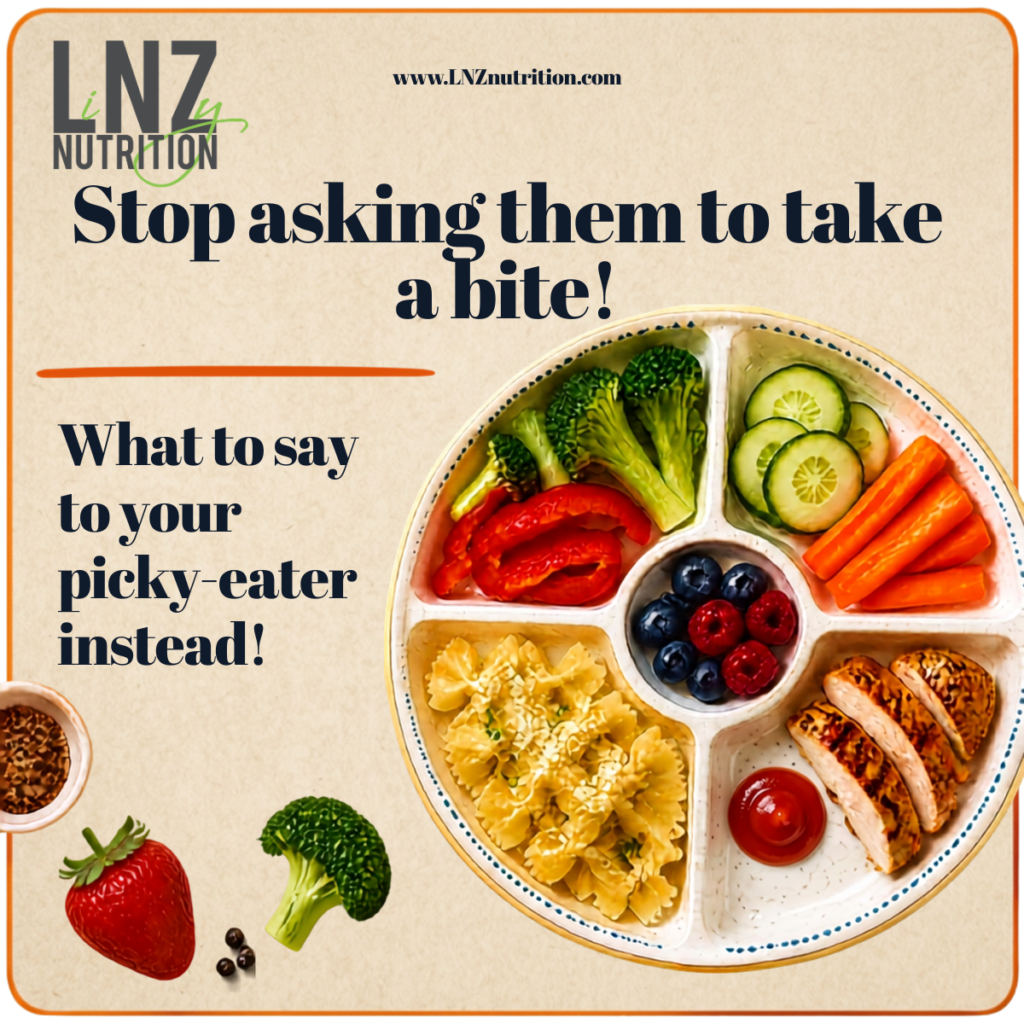
If you have a child who is a picky eater, I am going to guess that you have tried to pressure them to eat before. You may have said, “Just try it,” “Just take one bite,” “Take one more bite,” or “If you don’t eat this, we can’t have dessert.”
I know you mean well, and your goal is for your child to eat a nutritious diet! However, the words we use with picky eaters matter. What we say can sometimes make trying new foods even harder, and we want to avoid eating becoming a food battle.
As a pediatric dietitian working with picky eaters (including my own kids!), I know the challenges. One thing I work on with parents of picky eaters is how to talk about food. In this post, I am going to cover a few common phrases that I recommend changing, and what to say instead.
- “Just take one bite”
Encouraging your child to take a bite feels harmless. However, for picky eaters, this can feel like pressure. Let’s pretend you really dislike grilled chicken. Now I want you to imagine that a piece of grilled chicken was served to you for dinner and you were told to “just take one bite.” How would you feel?
What to say instead of “just take one bite”
Don’t say anything, or use language that will encourage them to explore food without forcing them to eat it. You can serve them their meal and let them decide if they are going to eat it. If you NEED to say something, say something that would encourage them to interact with the food but make it fun. For example, “Do you think the peppers are crunchy?” or “Do you think the red and yellow peppers taste the same?”
- “You have to eat vegetables before you can have more pasta”
If you notice your child is always asking for more before they eat all of the components on their plate, I don’t want you to tell them they have to finish something before they can have more of something else. For example, requiring them to eat broccoli before they can have more pasta might unintentionally teach them that they have to eat the vegetable before they get more of the food they actually want.
What to say instead of “You have to eat vegetables before you can have more pasta”
If they are asking for more pasta before they eat their vegetables, I want you to simply say, “Sure,” and either serve them more or let them serve themselves more. Kids need opportunities to learn how to regulate their appetite, and sometimes what a parent thinks is too much of a food is actually the amount a child may need. This does not mean that you always have to say yes and keep providing more of whatever they ask for.
- “You cannot have dessert tonight if you don’t eat more dinner”
Dessert should not be contingent on how much dinner a child eats. When we require a certain amount of dinner to be eaten to earn dessert, we can unintentionally make dessert even more desirable.
What to say instead of “You cannot have dessert tonight if you don’t eat more dinner”
How you decide to handle dessert is up to your family (and this can and will be a separate post topic!). If dessert is expected that night, simply serve it either with dinner or after dinner. What your child eats beforehand should not determine whether or not they get dessert.
If you don’t think they ate enough dinner, you don’t need to say anything. Or, if they are asking about food later, you can simply remind them, “This is dinner. We will have another opportunity to eat when we have a bedtime snack.” If your family does not offer a bedtime snack, you can let them know that breakfast will be the next opportunity to eat.
- “You are such a picky eater!”
Try to avoid labeling your child as a picky eater. A child who constantly hears that they are a picky eater may start seeing themselves as the child who does not want to try new foods. This includes how you talk to your child about their eating and how you talk to others about their eating. You may be talking to a friend in front of your child and say to your friend, “They won’t eat anything, they are such a picky eater.”
What to say instead of “You are such a picky eater!”
Try using language that is encouraging instead of labeling. The next time your child turns down a food, try saying, “You must still be learning to like that food.” You can also get curious and ask, “Do you think there is something we could add to that that could make it taste better for you?”
- “I don’t think you’re going to like that”
When you automatically assume that your child is not going to like something, you might discourage them from wanting to try it. During my sessions with parents and their kids, I will often mention a food that a child sounds excited about, only for a parent to quickly add, “They are not going to like that” or “They would never try that.”
What to say instead of “I don’t think you’re going to like that”
Let your child get curious about different foods. If they express interest in something you don’t think they will like, try not to predict their reaction for them. Simply lead with, “Sure, let’s try it!” or say nothing, serve the food and let them decide for themselves if they want to try it.
What If I Already Say All of These Things?
If you are already saying everything I am telling you not to say, don’t panic! All changes with nutrition take time! That includes changing your reactions and what you say. Start with a small goal of choosing one phrase you frequently use and try changing it to something that takes some of the pressure away from eating.
Changing the Language is Just One Piece of the Puzzle
When it comes to picky eating, the language we use matters. However, picky eating can have a lot of root causes. Depending on what the root cause of the picky eating is, different approaches may be needed to expand a child’s diet. That is why I developed “Growing Confident Eaters,” a program to help families understand their child’s picky eating with personalized steps for their unique child and situation.